

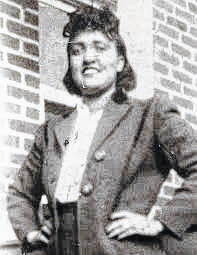
Lacks
In 1951 a 31-year-old African American mother of five named Henrietta Lacks was not feeling well.
Having given birth to her fifth child four and half months earlier and afraid because she was still experiencing unexplained bleeding, Lacks took herself to the only hospital in her area that accepted patients of color — John Hopkins Hospital — on January 29, 1951.
Once there, blood was drawn and tests were run. Not long after, a doctor diagnosed Lacks with aggressive cervical cancer, and here is where the story turns from tragic to ugly.
Discovering the “Immortal Cells”
Ms. Lacks received radiation treatment at John Hopkins for nine months. She did not tell anyone about her diagnosis, only explaining her trips to the hospital by telling her husband she needed medicine. Lacks was determined that she could and would handle her illness on her own.
Unbeknownst to her, the wheels of fate were already churning against Lacks. Specifically, in a John Hopkins lab run by Dr. George Otto Gey where Lacks’ cancer cells were being studied.
Standard treatment in the 1950s for cervical cancer consisted of radium therapy. During Lacks first radium therapy treatment, her gynecologist Dr. Howard Jones, removed a tissue sample from the tumor on her cervix. This sample was then passed along to Dr. Gey, who discovered a scientific breakthrough while peering at her cells under the microscope.
Unlike anything the doctors, researchers, and lab technicians had ever seen, Lacks’ cells continued to live and multiply while all other tissue sample cells died within days of their extraction from the body. Incredibly, Lacks’ cancer cells were continuing to divide and multiply — earning them the name “immortal” in many scientific circles.
Realizing they had something medically unique on their hands, the doctors did not rush to Ms. Lacks’ side and beg for the use of her cells to further healthcare research, no, they decided to go with the option of not asking for Lacks’ permission and profiting off of her misfortune for decades, all without the knowledge of Lacks or her family.
Sadly, Henrietta Lacks did not survive her cancer battle, succumbing to the illness on October 4, 1951. She was buried in an unmarked grave inside her family cemetery.
For us “ordinary” folks this would mean the end of the story. But not for Henrietta Lacks and her immortal cells!
Contributions to Science
Sparking seventy years of controversy regarding where the medical line should be drawn between doing what is right and saving lives, Lacks’ cancer cells that were taken and studied without her consent have proven to be a bonanza for the medical research field.
Later shared with the world, Lacks’ cancer cells, also known by the nickname on her chart: “HeLa” line, has led to developments in several medical fields, most notably in chemotherapy advancements. Her cells are still used today to study cancer cell behaviors, test new drugs and treatments, x-rays, human space travel, in vitro fertilization, research into tuberculosis, blood disorders, Ebola, and cell aging. Lacks’ cells were also used in the creation of the polio vaccine and in breakthroughs in treating HIV and AIDS.
Due to the controversy, Lacks’ immortal cells provided more than just advancements in medicine, the injustice of what was done to her medically has also left its legacy on patient’s rights and medical ethics.
How Lacks’ family found out
While medical science was making advancements, the Lacks family was grieving the light and love that went out of their home with the death of Henrietta.
A mother of five children, and wife to David “Day” Lacks, Henrietta Lacks was a living, breathing woman who called this old hunk of spinning rock home for 31 years. David was Henrietta’s childhood sweetheart and she married him at the age of 20.
Henrietta was born August 1, 1920, to a poor African American family in Roanoke, Virginia. She lived modestly in a log cabin with her grandfather that had once been a slave quarters on the plantation previously owned by her white great-grandfather and great-uncle, after her mother died when she was only four years old.
A girly girl, Henrietta often wore red nail polish and was said to never leave the house without first donning a pleated skirt. Her family says she loved to cook, particularly spaghetti, and really loved to dance — often with one of her children clasped in her arms or balanced on one sashaying hip.
After her death, time continued to march on when from out of the blue Henrietta Lacks’ daughter-in-law had lunch with a very close friend in 1973 whose husband worked at the National Cancer Institute. Turning up for the lunch date, the friend’s husband started talking shop and mentioned he was currently working with the cancer cells of a woman who had died from aggressive cervical cancer 25-years prior. When he mentioned the name — Henrietta Lacks — Bobbette Lacks nearly choked on her food!
Around the same time, the family began receiving strange phone calls from researchers attempting to solicit blood samples from them.
Apparently, a large sample of cell cultures were accidentally combined with HeLa cells in the lab and researchers were now desperate to understand more about the family’s genetics.
Dots were connected and at that moment the Lacks family finally discovered, through Bobbette’s chance lunch date, that Henrietta’s cells were being used for both medical research and commercial profit.
A contentious legal battle unfolded in the aftermath over the rights to Henrietta Lacks’ cancer cells and compensation for her family.
The Lacks family legal battle has stretched over decades and kicked up privacy concerns over the health records of living family members. In a disquieting move, the genetic sequence of the Lacks family became public when the DNA sequence of the genome of a strain of HeLa cells was published by researchers in March 2013.
The following August an agreement was announced between the Lacks family and the National Institutes of Health [NIH]. The agreement granted the family some control over access to the cells’ DNA sequence and promised to acknowledge Henrietta Lacks in scientific papers.
The Lacks’s estate filed a lawsuit against Thermo Fisher Scientific for their role in profiting from HeLa cell line without consent in October 2021. As part of the suit the family requested the full amount of the company’s profit from their usage of HeLa cells.
Thermo Fisher Scientific later settled with the Lacks family for an undisclosed amount and terms on July 31, 2023.
At the heart of Henrietta Lacks case one lingering moral question still burns — did the medical ends justify the means?